
Call us toll free:
8619709992541 [email protected]
Jctprint Machinery Co., Ltd
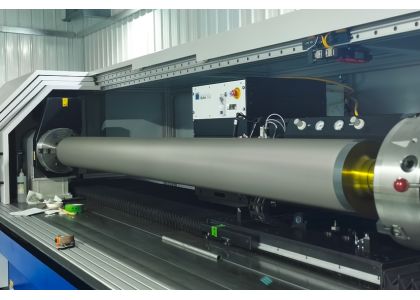
When an anilox roller needs replacement, many flexographic printers have the same question:
Do I need to buy the replacement from the original equipment supplier, or can a custom-made anilox roller work with my existing flexo press?
In many cases, a custom-made anilox roller can be manufactured to match the existing roller and printing requirements. The key is not simply the machine brand. The replacement roller must correctly match the dimensions, mechanical structure, LPI, cell volume and printing application of the existing roller.
For printers using CI flexo, wide-web flexo and label printing machines, a properly specified custom replacement can provide a practical option when an existing anilox roller is worn, damaged or no longer providing stable ink transfer.
A replacement anilox roller needs to do more than physically fit into the press.
Before manufacturing, several details of the existing roller should be confirmed.
The basic dimensions must match the existing press configuration, including the roller diameter, face length, overall length, shaft dimensions and other installation details.
Small dimensional differences can affect installation or operation.
For this reason, an existing roller drawing is one of the most useful references when ordering a custom replacement.
If a drawing is unavailable, detailed measurements, photos and the machine model can also help with technical confirmation.
Matching the physical dimensions is only the first step.
The replacement roller must also provide the required ink transfer performance.
Two important specifications are:
LPI (Lines Per Inch) — describes the line screen of the engraved cells.
BCM (Billion Cubic Microns) — indicates the cell volume and is closely related to the amount of ink the roller can carry and transfer.
If the existing roller performs well and you simply need a replacement, its current LPI and BCM can be used as an important reference.
If printing requirements have changed, the specification can also be reviewed before manufacturing the new roller.
Anilox rollers with similar LPI values do not necessarily provide identical printing performance.
Cell geometry, engraving consistency, cell volume and engraving quality can all affect ink transfer.
This is especially important for applications that require consistent color during long production runs.
JCTPRINT uses ALE laser engraving equipment to manufacture ceramic anilox rollers with controlled cell structures according to the required LPI, BCM and application.
For high-speed flexographic printing, mechanical accuracy is also important.
A replacement roller that fits the machine but has poor runout or balance may affect stable operation at higher press speeds.
This is particularly relevant for CI flexo and wide-web printing machines, where rollers operate continuously at high speed.
Therefore, dimensional inspection, runout testing and dynamic balance testing should be part of the quality control process for replacement rollers.
Yes. Custom anilox rollers can be manufactured according to the specifications of an existing roller rather than relying only on a standard model.
JCTPRINT provides customized replacement anilox rollers for customers using different flexographic printing equipment, including machines from W&H, BOBST, Comexi, Nilpeter, Mark Andy and other manufacturers.
The important point is to accurately confirm the existing roller specifications and machine requirements before production.
A custom replacement should not be selected simply because it is described as “compatible” with a certain machine brand.
The actual roller specifications should always be checked.
This is a common situation, especially with older flexo presses.
You can still start the technical confirmation process by providing information about the existing roller and machine.
The most useful information includes:
The more complete the information, the easier it is to confirm whether a customized replacement can be manufactured accurately.
Not always.
If the existing anilox roller has been providing good printing results and the application has not changed, reproducing the original specification may be the simplest option.
However, you may want to review the specification if you have changed:
printing materials, ink systems, printing designs, required color density or production requirements.
For example, a roller originally selected for heavy solid coverage may not be the best choice for a newer job requiring finer graphics.
In this situation, ordering a replacement also provides an opportunity to check whether the existing LPI and BCM are still suitable.
Before shipment, the finished roller should be inspected to confirm that it meets the required specifications.
At JCTPRINT, quality control can include dimensional and surface inspection, AniCAM cell inspection, runout testing and dynamic balance testing.
Cell inspection is particularly useful for checking whether the engraved cell structure and volume meet the intended specification.
This provides more useful information than relying only on the nominal LPI printed on a specification sheet.
A customized replacement anilox roller can be considered when your existing roller is worn or damaged, ink transfer performance has declined, you need additional spare rollers, or you want a roller specification better suited to a new printing application.
It is also useful when the original roller drawing is available and you want a new roller manufactured according to the existing dimensions and printing requirements.
The most important step is technical confirmation before production.
If you already have an anilox roller that needs replacement, you do not need to start from zero.
Send JCTPRINT your:
machine model, existing roller drawing, dimensions, LPI, BCM or clear roller photos.
Our technical team can review the information and confirm the specifications required for a customized ceramic anilox roller.
JCTPRINT manufactures ceramic anilox rollers and anilox sleeves for CI flexo, wide-web flexo, label, flexible packaging and other printing applications.
Send your existing roller specifications or drawing to discuss a custom replacement.


