
Call us toll free:
8619709992541 [email protected]
Jctprint Machinery Co., Ltd
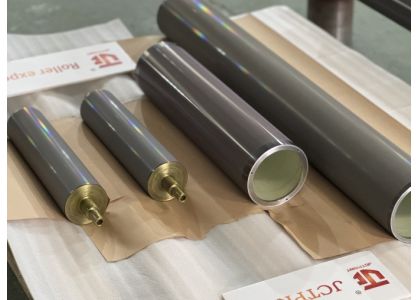
Many flexo printers believe that poor print quality is caused by the anilox roller supplier. So they switch to a new manufacturer—sometimes even a more expensive one—expecting immediate improvement.
But in reality, changing an anilox roller supplier often fails to solve the problem.
If your flexo printing results didn’t improve after replacing the anilox, the issue is usually not “supplier A vs supplier B,” but something deeper in how the anilox is specified, integrated, and used.
In many cases, the new anilox roller is produced with exactly the same specifications as the old one:
If the original specifications were not suitable for your ink, substrate, or press condition, then a new supplier simply reproduces the same problem with better surface quality.
Changing manufacturers without re-evaluating the anilox specification rarely changes print behavior.
Flexo printing performance depends on how the anilox interacts with:
Two anilox rollers with identical BCM and LPI values can behave very differently in production.
If the supplier focuses only on nominal values, without understanding your actual process window, the improvement will be minimal.
This is why anilox printing problems often survive supplier changes.
Many printers replace an anilox because of:
But these symptoms are not always caused by poor manufacturing. They are often the result of:
Replacing the roller without addressing these factors only resets the problem temporarily.
Even a high-quality anilox roller cannot perform well if:
In these cases, changing the anilox roller manufacturer does nothing to improve ink transfer stability.
The issue is mechanical integration, not engraving quality.
A new supplier often brings:
But if decisions are still based on limited information—without real production data—the result remains the same.
Meaningful improvement requires:
Flexo printing is a system.
The anilox roller is a key component, but it interacts with every other variable in the press.
When results don’t improve after changing suppliers, it usually means:
Before replacing your anilox roller again, ask these questions:
A reliable anilox roller manufacturer doesn’t just offer a replacement—they help identify whether a replacement is even necessary.
Switching an anilox roller supplier feels like a decisive action, but decisive actions don’t always solve the right problem.
In flexo printing, improvement comes from understanding interactions—not just replacing components.
If changing your anilox roller didn’t improve print quality, the solution is rarely “find a third supplier.”
It’s to re-examine how the anilox fits into your entire printing process.


